Home>Blog>Rest Protein, Explained: The Economics of Seafood’s Second Harvest
Blog
Rest Protein, Explained: The Economics of Seafood’s Second Harvest
Published: January 24, 2026
An inside look at rest protein economics, showing how seafood by-products become meal, oil, and value through scale, logistics, and pricing decisions now!
(Many of the links in this article redirect to a specific reviewed product. Your purchase of these products through affiliate links helps to generate commission for Simplelivingeating.com, at no extra cost. Learn more)
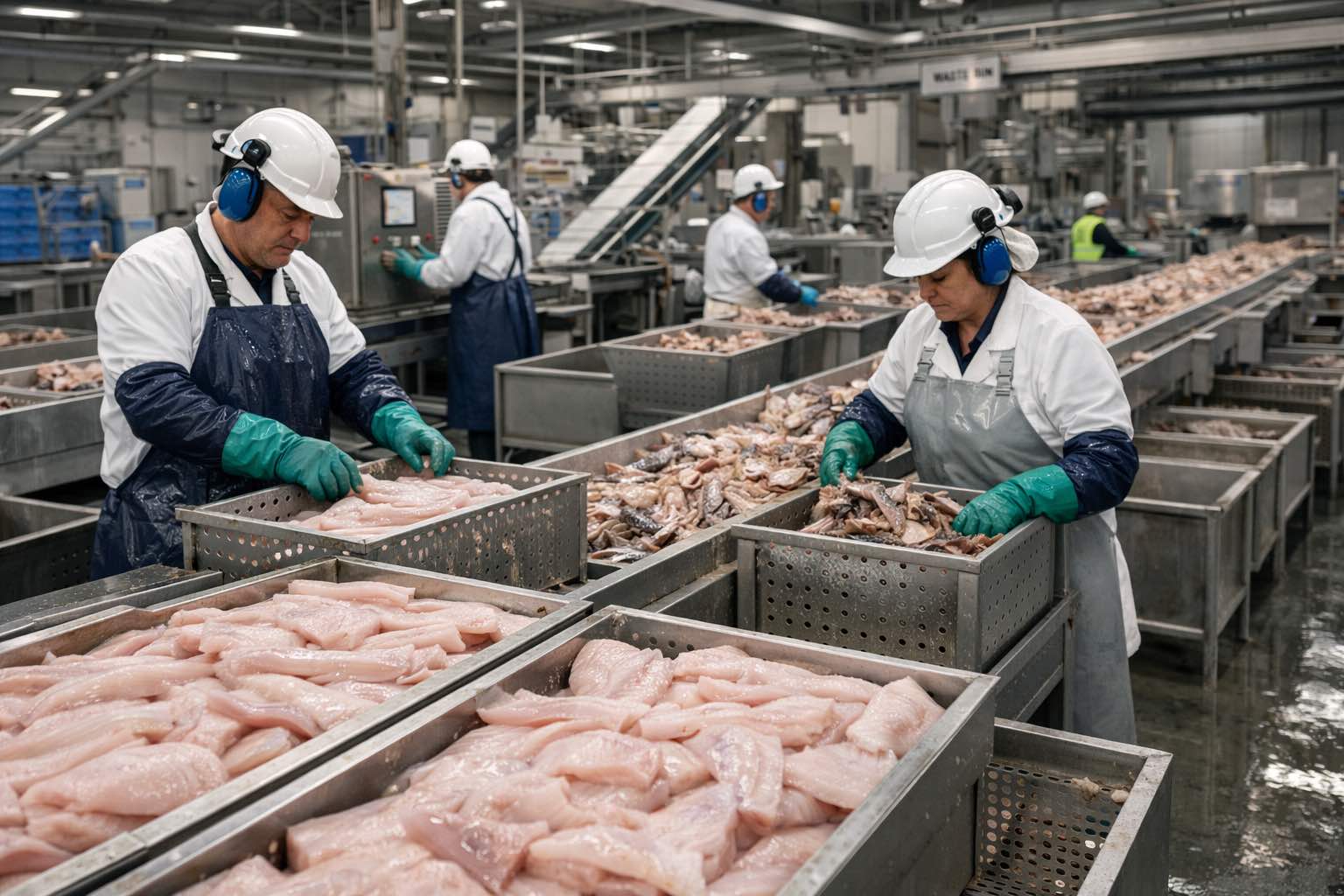
In seafood processing, “waste” is usually a euphemism for unfinished math. A fish fillet is a high-value cut, but it’s rarely the whole animal and depending on species and product form, the parts that don’t make it into a retail tray can be substantial. The Marine Ingredients Organisation (IFFO) puts the by-product range at 30%–70% of a fish’s wet weight (heads, frames, skins, viscera, trimmings, and more).
Pacific Seafood calls those leftover materials “rest protein,” and in its 2024 CSR report the company frames them as inputs not refused, guided by a “100% fish utilization goal.” In 2024, Pacific reported that it prevented 49,114,703 pounds of rest protein from entering landfills by converting it into “fish meals and oil, fertilizer, pet food, and much more.”
What does that conversion actually look like and where does the money show up?
The Rest Protein Map: Where Each “Leftover” Tends to Go
Trimmings and Mince
These are the cleanest leftovers: small pieces of muscle from trimming portions, removing pin bones, or shaping products. When handled quickly and cold, they can be redirected into:
- value-added foods (cakes, patties, soups, spreads), or
- higher-value protein ingredients like hydrolysates (enzymatically broken-down proteins used in foods and pet diets)
The key isn’t romance, it’s time and temperature. If trimmings aren’t stabilized fast, their value drops and the “best” destination becomes feed or fertilizer.
Frames (Skeletons With Residual Meat)
Frames are the classic “there’s still food here” by-product. Depending on markets and equipment, they may be:
- mechanically recovered into mince,
- cooked/pressed into meal and oil, or
- sent to specialty channels (stocks, extracts, collagen/gelatin projects)
Pacific’s CSR report points to work with Oregon State University exploring uses of Pacific whiting gelatin as an example of how a low-margin stream can become a research-driven ingredient play.
Skins
Skins can be:
- collagen/gelatin inputs (a growing field across food, supplements, and cosmetics), or
- rendered into meal/oil when ingredient markets aren’t accessible
Skins are one of those streams where “economics” often means “can you aggregate enough volume, consistently enough, to justify a dedicated process?”
Shells (Oyster, Clam, Crab)
Shells are a different animal literally mineral-heavy, bulky, and expensive to move. When they’re reused rather than landfilled, destinations often include:
- soil amendments (calcium carbonate-rich material),
- compost blends, and sometimes
- habitat projects, where shells become reef base material
Pacific’s CSR report includes a vivid example: it describes transporting millions of Pacific oyster shells from Washington to Maryland for Chesapeake Bay restoration, logging 84 truckloads and 25,000 miles traveled. It’s a reminder that shell “recycling” is frequently a logistics story first.
The Factory Behind the Scenes: How Rest Protein Becomes Meal and Oil
For many processors, the backbone of rest protein utilization is rendering into fishmeal and fish oil because those markets can absorb volume reliably.
The FAO’s classic technical breakdown describes the principal fishmeal/oil process as separating three fractions solids, oil, and water through steps like cooking, pressing, separation of press liquor (including “stickwater”), evaporation, and drying. In plain language: you apply controlled heat, squeeze out liquids, separate oil, concentrate the remaining protein-rich material, then dry it into a shelf-stable meal.
This is not glamorous. It is, however, one of the most scalable ways to ensure that “leftovers” don’t become disposal costs.
The Big Economic Hinge: Protein Is a Commodity, Oil Can Be the Prize
Here’s the part most consumers never see: rest protein streams don’t live or die on sentiment; they live or die on unit economics, collection cost, processing cost, and what the outputs can sell for.
Fishmeal Is Globally Priced and Not Cheap
The World Bank’s Commodities Price Data (“Pink Sheet”) lists fish meal (German fishmeal, Danish 64% protein, FOB Bremen) at $1,794 per metric ton in November 2025. That price signal matters because it creates a floor value for large-volume by-products: if you can turn mixed rest protein into a standard-grade meal, you’re selling into a known, internationally traded market.
Fish Oil’s Volatility Is a Second Lever
Oil pricing can swing hard and when it does, it changes which by-product streams are “worth it.” An OECD-FAO outlook document notes fish oil prices grew 112% between 2021 and 2023, driven partly by supply issues and the high price of vegetable oils. In tight years, oil recovery and loss prevention can become just as important as protein yield.
By-Products Are Not a Sideshow Anymore
IFFO reports that 42% of the raw material used for marine ingredient production now comes from by-products (rather than whole fish), a sign that the industry’s center of gravity is shifting toward circular supply.
And demand is structurally supported by aquaculture: NOAA notes fishmeal and fish oil remain common ingredients in aquafeeds, even as the sector works to reduce inclusion rates through alternatives.
Disposal Avoidance Is Real Money, Too
Even if a by-product doesn’t sell for much, avoiding landfill can still be a win especially as disposal pricing rises. A trade report summarizing EREF’s 2024 analysis says the average U.S. landfill tipping fee rose to $62.28 per ton in 2024. That’s not a seafood-specific number, but it illustrates why processors increasingly treat “waste diversion” as both sustainability and cost control.
So What Does “Good Economics” Look Like for Rest Protein?
A simple way to think about it:
- Stabilize fast (cold chain + clean segregation) so streams keep optionality
- Route smart (highest-value use that your volume/quality can consistently support)
- Exploit scale (rendering works because it can take lots of mixed material)
- Watch oil (when oil prices spike, recovery efficiency suddenly matters more)
- Price in logistics (shells especially bulky, heavy, and expensive to move)
Pacific’s reported diversion of 49.1 million pounds in 2024 signals the scale at which those economics become meaningful. At that size, rest protein isn’t a sustainability footnote; it’s a parallel production system with its own KPIs.
The Credibility Check: Circular Doesn’t Mean Consequence-Free
Turning by-products into valuable products can reduce landfill waste but it also raises questions that serious operators have to answer:
- Traceability: do you know what went into the meal or oil, and from where?
Food safety & quality controls: are streams segregated to prevent contamination? - Environmental tradeoffs: are you moving shells or by-products long distances where the emissions and costs overwhelm the benefit?
Done well, rest protein utilization is a “less waste, more value” story. Done poorly, it’s a narrative that collapses under scrutiny. The difference is usually not ideology; it’s process discipline.